


Since 1933, a story of flavor and family tradition
Our story begins in 1933, when Great-Uncle Luis left Sorzano to open Bar Luis on Paseo de las Delicias, a spot that soon became famous for its calamari sandwiches. Years later, our grandfather Martín joined the family business and opened his own place on the same street. That’s where his children grew up — among stoves and counters — learning the craft that we still carry on today, proudly honoring our roots.
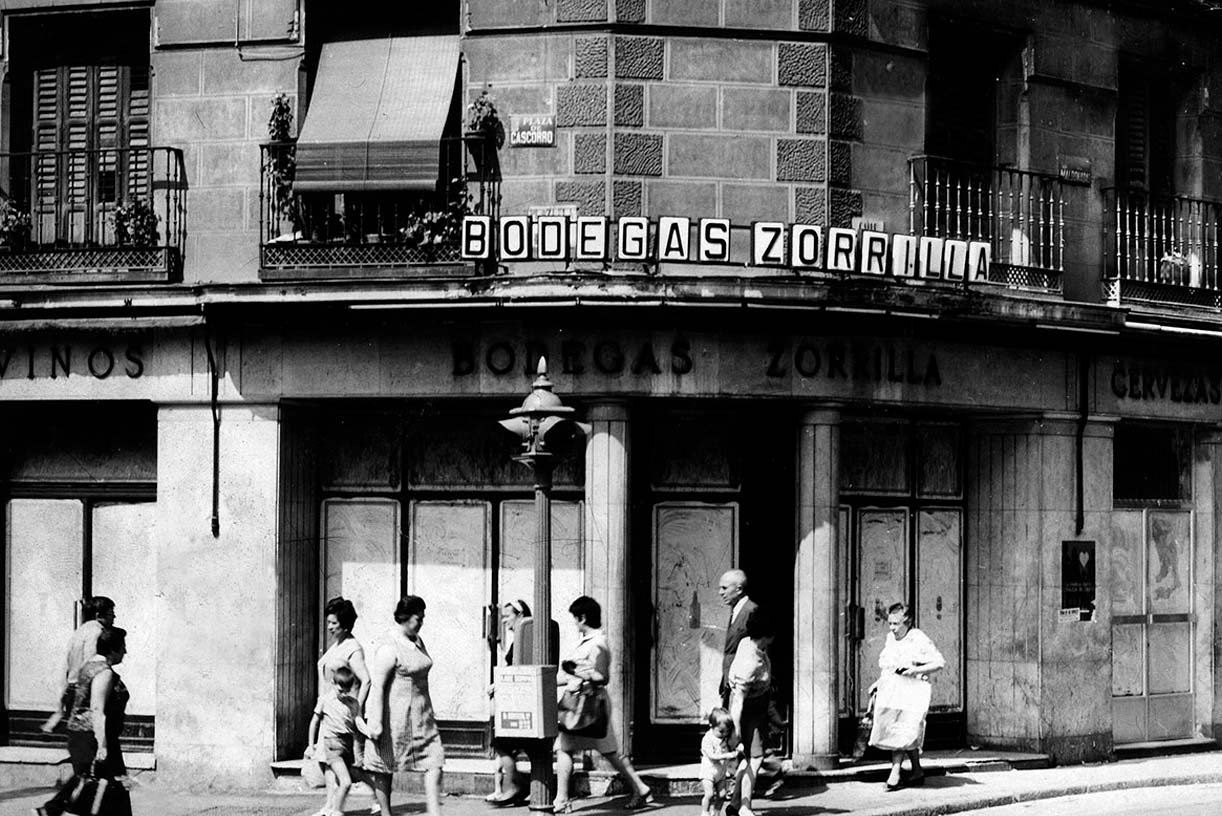
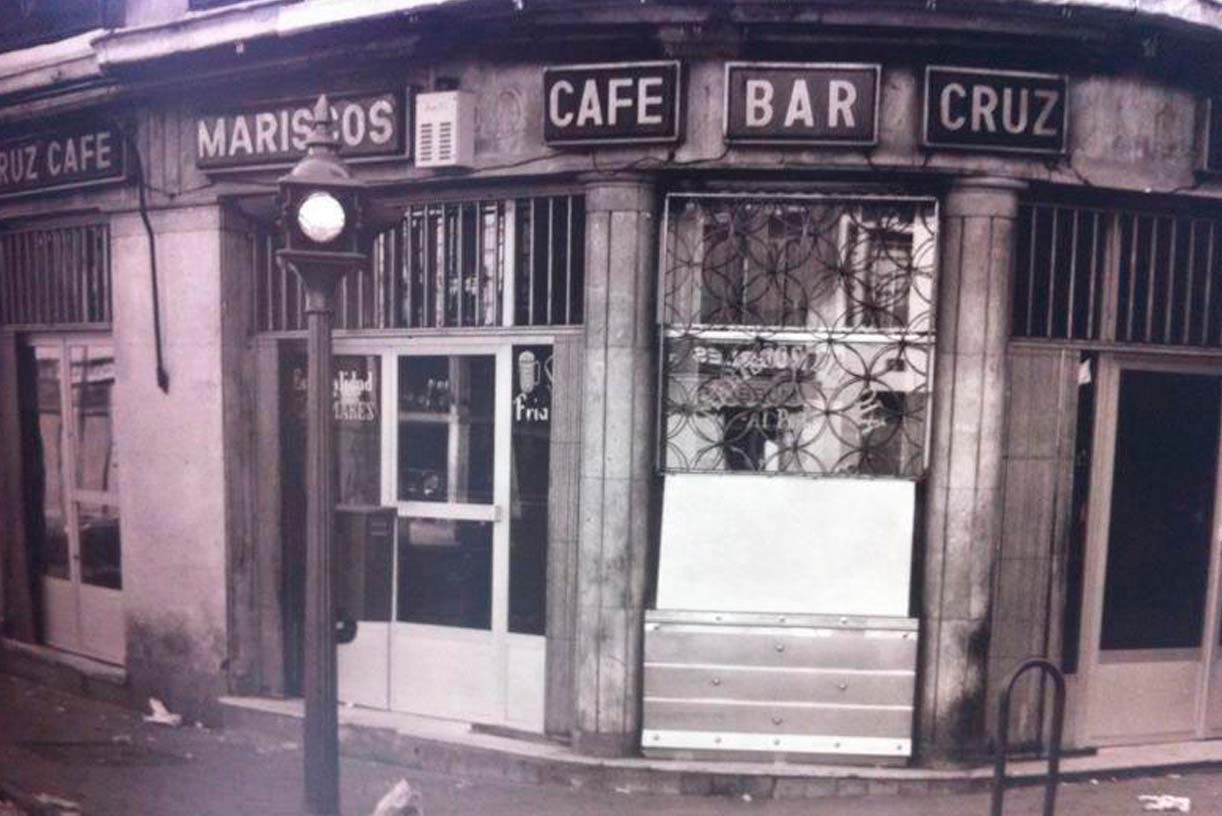
La Casa de las Navajas: a ‘70s classic with the soul of a bar and the taste of cockles
Bar Cruz, known to everyone as “La Casa de las Navajas,” first opened its doors on October 1st, 1970. The name pays tribute to our grandmother, María Cruz Calvo. Back then, we were known for our natural cockles, battered shrimp, fried songbirds, and the freshest seafood: oysters, velvet crabs, Norway lobsters, goose barnacles… The venue, originally called Bodegas Zorrilla, was transferred for two million pesetas. Another million went into the striking stainless steel bar — which, more than half a century later, still stands, bearing witness to thousands of shared stories.
The Bar Cruz Saga and the Legacy of Grilled Razor Clams
Over time, the business was passed down to Antonio and Luis, who turned grilled razor clams into the house’s signature dish. Back then, there was also another Bar Cruz in Plaza Tirso de Molina, which soon became Luis’s responsibility, while Antonio remained in charge of the Cascorro location. Today, several decades later, we — Raúl, Óscar, Luis Miguel, and Germán — the grandchildren of Martín and Cruz, continue writing this family story with the same passion our grandparents passed down to us.

Discover Our Story, decade by decade
In this corner of Cascorro, every tapa, every beer, and every story speaks of more than just hospitality — they speak of family, of the neighborhood, and of resilience. From the days of endless fiestas and the first Mahou beers, through the chaotic years of brawls, raffles, and everyday heroes, to the quiet transformation of the barrio with Chinese shops and the almost unnoticed birth of “La Casa de las Navajas.” Here, it’s not just grilled seafood that’s served — it’s memory.
Stories from Bar Cruz: A Thousand Sandwiches and a clandestine Slot Machine
In the early ’70s, El Rastro didn’t reach the square yet — it started down on Ribera de Curtidores. We always say we were in Cascorro before El Rastro ever got here. The Embajadores neighborhood was like a little village back then: scrap dealers down below, antique sellers and secondhand shops in the middle, paintings on San Cayetano, and songbirds on Fray Ceferino González.
Around that time, two slot machines arrived — still illegal back then — going up and down from the cellar on a freight lift. People played with tokens, like part of some secret ritual.
On August 15, 1973, during the La Paloma festivities, we sold a thousand sandwiches without closing the bar once in 24 hours. Exhausted, Cruz turned to Martín and said, “Close it already — I’m not making one more calamari today.”
Toward the end of the decade, raffle fever took over: homemade lottery tickets scattered all over the floor, laughter echoing through the bar. It came and went, but left behind yet another page in our story.
From an overflowing Rastro to baby eels at the Bar: Intense years in Cascorro
They were the years of the Rastro’s golden age. It was the only place open on Sundays, so anyone in need of anything came through here. The stalls spread uncontrollably, and with them came fights over territory. The mafias made their presence felt, and nighttime brawls became the norm—until the City Council stepped in to calm things down and put an end to the street-side betting rings.
During Spain’s Transition to democracy, anarchists from the CNT and right-wing militants from Cristo Rey would clash in the area, settling scores with their fists. All it took was a spark for a human avalanche to tear through the stalls, forcing us to pull down the shutters to protect the bar.
It was also the darkest of times, with heroin lurking in every corner of the neighborhood. But even among the shadows, there were bright spots: the Ciudad de Viena pastry shop, La Flecha de Oro sports store—where we’d inflate soccer balls for a peseta—and Marihuana, the legendary rock T-shirt shop.
And yes, there was a day when we served baby eels as an aperitif. A regular lost everything on the slot machines and couldn’t pay his tab… so he settled the debt with an entire shipment of baby eels. Before they spoiled, they ended up on the bar. Just another story from Bar Cruz.
When the bar holds on: changes, beers, and neighbors who are no longer here
Changing beer wasn’t an easy decision for a family that had always served El Águila. But when the quality dropped, Antonio was clear: “Don’t serve your customer something you wouldn’t drink yourself.” That’s how Mahou came to our bar. Since then, we pour beer the proper way: no carbonic acid, and kegs chilled to 6 degrees. And those who taste it, know the difference.
The San Cayetano festivities are still sacred. They’re the only days when we serve limoná, and the whole family knows it’s time to pitch in. Like in 2005, when a waiter got sick and Martín—who worked at city hall—took off his tie, put on a pair of jeans, and jumped behind the bar like one of us.
There were tough times too. The building had a single owner, determined to evict the longtime tenants. He refused to renovate and filled two floors with pensioners and young kids from Algeria, part of what was known as the Glue Gang. They were high, snatched bags, and hid hash in the bar’s bathrooms. It was chaos: raids, trouble, constant tension.
Eventually, the building emptied out. The lifelong neighbors were gone—the ones who looked out for you, who came in every day for their beer and tapa. Quique, Sole, Guille, Bellido, Antonio, Socorro… all gone. The familiar faces that were part of our story disappeared. The neighborhood began to change, and by the late ’90s, the first Chinese shopkeepers arrived, ushering in a new era. We’re still here.
How we held on and became La Casa de las Navajas
Without us even realizing it, the neighborhood woke up transformed. The streets we’d known all our lives — Cascorro, Duque de Alba, Juanelo, Encomienda — became a massive textile bazaar run by Chinese merchants. In the square, only six shops didn’t sell clothes. Half-joking, half-serious, we used to say we were even learning Chinese.
They said — though it was never proven — that it was the Chinese mafia who took care of the Glue Gang. What was true was a surreal visit: a Chinese businessman showed up with bodyguards and a briefcase full of €500 bills. He sat down with our grandfather and offered him two million euros for the bar. He looked at him calmly and replied, “This bar feeds me, feeds my children, and will feed my grandchildren.” And that was the end of the negotiation. We’re still here.
And how did we become The House of Razor Clams? By popular demand. They’d been on the menu for years, but word of mouth worked its magic. From selling 10 kilos a week, we jumped to 70 — which lets us keep quality high and prices fair. One day, people stopped calling us “El Cruz” and started asking straight away, “Is this the razor clam place?” That’s how the name was born. And that’s how we carry on: grilled, with pride and flavor.